
-
Call Us Now: +852-590-555-89

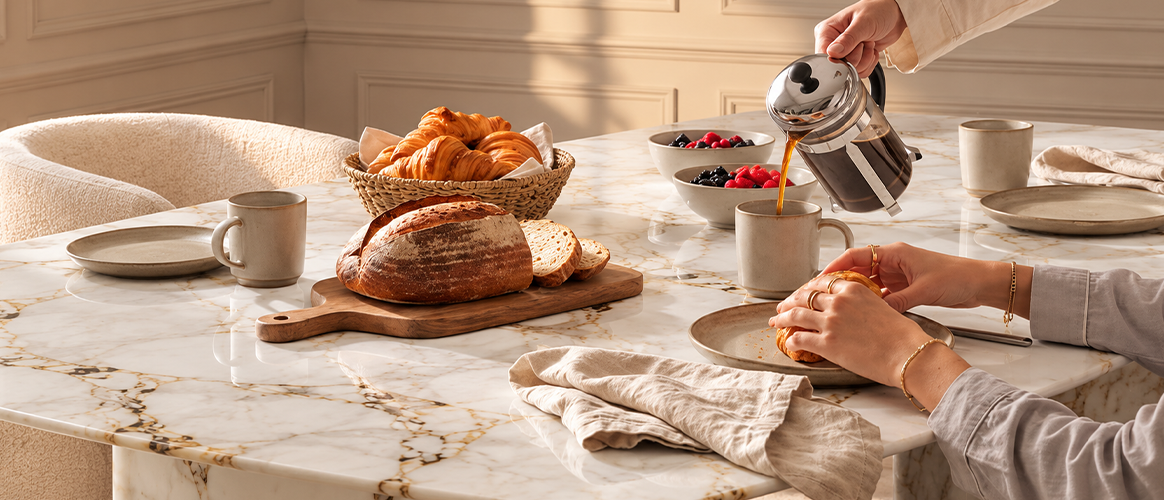
Dinner tastes different when the table beneath it has presence. Marble brings drama, history, texture, and unmistakable character into the dining room without saying a word. One moment it is holding weekday coffee and scattered mail. The next, it becomes the stage for candlelit meals, crowded celebrations, and conversations that tend to stretch past midnight. Yet owning marble involves more than choosing an attractive slab and placing chairs around it. From selecting the right finish to handling spills, weight, placement, and daily use, every precise detail matters. This guide reveals how to welcome marble into your home and enjoy every gathering around it.
A dining table already carries visual importance because of its size and central position. When that table is made from marble, its influence becomes even stronger. Natural veining directs the eye across the surface, while subtle color variations create depth that plain materials rarely achieve.
Marble can make a sparse room feel intentional. It can also calm a dining space filled with decorative objects by providing one strong visual anchor. Unlike furniture that depends on ornaments or bright colors for attention, marble tends to create interest through its natural pattern.
Each slab has its own lines, clouds, streaks, and tonal shifts. That individuality gives the room personality without making it feel staged. The table becomes more than somewhere to eat. It becomes the object around which the entire dining area can be arranged.
It is tempting to choose a dining table based only on photographs. Before falling for a dramatic surface, consider how the table will function during an ordinary week.
Do you serve family meals every evening? Will children use the surface for drawing or schoolwork? Do you host long dinners involving sauces, wine, citrus, and shared plates? Perhaps the table will spend weekdays looking sculptural and weekends surrounded by guests.
Your routine should shape your choice of size, finish, edge, profile, and also color. A busy household may prefer expressive veining that visually softens the appearance of minor marks. A quieter home may suit a pale, restrained surface with delicate lines.
Think beyond the polished dining room image. Imagine breakfast crumbs, warm serving dishes, laptop cables, grocery bags, and hurried cups of coffee. A suitable table should support real life while still making the room feel special.
The right shape affects movement, seating, serving, and social interaction. Rectangular tables suit longer rooms and provide generous space for platters. They also tend to create a traditional arrangement with clear seats at each end.
Round marble tables encourage conversation because everyone faces the center. They can work beautifully in square rooms, breakfast areas, or compact apartments. Without sharp corners, they also allow movement to feel smoother around the dining zone.
Oval tables offer the length of a rectangular design with a softer outline. Their curved ends make them visually lighter and can improve circulation in tighter spaces. Square tables create an intimate setting but may become less practical when additional guests arrive.
Measure the room before deciding. Leave enough space for chairs to slide backward and for people to walk behind seated dinners. A striking table loses its appeal when every meal requires awkward squeezing.
Marble comes in a wide range of colors and patterns. White and cream surfaces can make a room feel brighter, while gray, green, brown, or black varieties create a moodier atmosphere. Some slabs feature quiet wisps. Others display sweeping veins that resemble painted movement.
Consider how the pattern will looks across the full table rather than focusing on a small sample. Large, directional veining can become the visual centerpiece of the room. Smaller markings create texture without dominating nearby furniture.
The finish changes the personality as well. A polished surface reflects light and gives colors greater intensity. A honed finish appears softer and less reflective, creating a relaxed and modern look. Both options develop signs of use differently, so ask how the finish responds to dining activity before making your selection.
The goal is to find a flawless slab. It is to choose movement, color, and texture that feel right in your space.
The stone surface may attract the first glance, but the base determines how the table feels and functions. A weak visual pairing can make an impressive slab appear disconnected from the room.
Pedestal bases create open legroom and allow chairs to move freely. Twin pedestals support longer tables while reducing obstruction around the edges. Four-leg designs offer a familiar silhouette, although leg placement can limit seating flexibility.
Materials also tend to shape the mood. Timber introduces warmth and softens the cool appearance of marble. Dark metal adds contrast and works well in modern interiors. Stone bases create a sculptural, substantial statement, though they increase the table’s overall weight.
Sit at the table before buying whenever possible. Check where your knees rest, whether chairs fit between supports, and if guests can change positions comfortably. Visual drama matters, but comfort keeps people at the table longer.
Marble dining tables can be exceptionally heavy. Delivery therefore deserves attention long before the table reaches your door.
Measure entrances, elevators, stairways, corridors, and turning points. A table may fit through a doorway but fail to rotate through a narrow hall. Confirm whether the surface and base arrive separately, how many people will handle them, and whether assembly happens inside the room.
Consider the flooring beneath the table. Protective pads can reduce scratching and distribute pressure beneath narrow feet. If the table stands on a rug, choose one dense enough to remain stable under the weight.
Once positioned, avoid moving the table casually. Dragging can damage the floor, strain the base, or place uneven pressure on the stone. Decide on the placement beforehand by marking its dimensions with removable tape. This simple exercise reveals whether the scale works before delivery becomes a complicated puzzle.
Marble reacts differently from manufactured surfaces. Acidic foods and drinks, including citrus, vinegar, tomato sauces, and wine, may alter the finish if left sitting. Oils and deeply colored liquids may also leave visible traces.
The answer is not to fear every dinner. It is to create a quick response habit. Blot spills promptly with a soft, absorbent cloth. Avoid aggressive rubbing, which can spread the liquid across a wider area. Use a mild product suited to natural stone for routine cleaning, followed by a dry cloth.
Keep coasters, place-mats, and trivets nearby so using them feels effortless. A small dining station with napkins and surface accessories can make protection part of setting the table rather than an annoying extra task.
Marble is meant to participate in daily living. Sensible habits allow you to use it confidently while preserving the finish you selected.
A marble table can feel strong and monumental, but its surface still benefits from thoughtful handling. Hot cookware should rest on trivets instead of directly on the stone. Sudden temperature changes may place stress on the material or its finish.
Use boards when slicing bread, fruit, or other foods. Knives can leave scratches, while the stone can dull blades. Place felt pads beneath rough ceramics, decorative bowls, candleholders, and metal objects that might scrape when moved.
Serving trays are useful for grouping bottles, condiments, and sauces. They reduce repeated contact with the surface and make clearing the table quicker. Trays also create an attractive layer that can be changed according to the meal or occasion.
These habits don’t need to make a dining feel formal. They simply allow the table to host lively meals without every movement becoming a source of worry.
A marble dining table doesn’t require formal dinners, elaborate menus, or matching place settings. Its strength lies in making even simple routines feel more intentional.
A bowl of fruit looks sculptural against natural veining. Takeaway containers feel more inviting when transferred to shared plates. Morning coffee gains atmosphere when sunlight moves across the stone. The table encourages you to pause, sit down, and turn eating into an experience rather than another task.
That emotional effect is why marble continues to command attention. It beings ceremony without demanding formality. It supports quiet breakfasts, loud family dinners, improvised gatherings, and evenings that begin with one course and end hours later.
Choose a table that fits your room, habits, and visual taste. Learn how the surface responds to everyday use. Then fill the chairs, serve something worth sharing, and let the dining room become the place where everyone wants to stay.